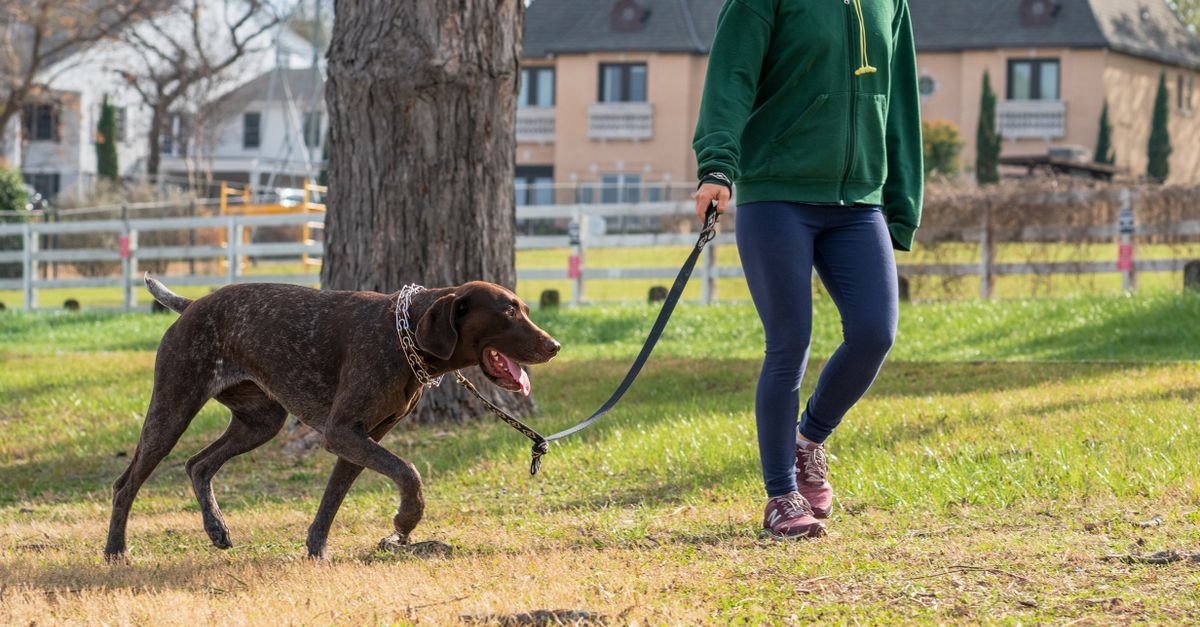
A busy week does not need a heroic dog walking plan. It needs a routine that protects the dog’s body, gives the owner a realistic fallback, and makes changes visible before they become bigger care problems. The best version is boring on purpose: same cue, same gear spot, same minimum walk, same note when something changes.
For most owners, the practical question is not how many miles a dog should walk in an ideal week. It is what the dog can count on when meetings run late, weather turns awkward, or the usual helper is unavailable. That answer depends on age, health, training, temperature, neighborhood safety, and the dog’s normal energy level.
Set The Minimum Walk Before The Week Gets Messy
Choose a minimum that can happen even on the worst normal weekday. For one dog that may be a ten-minute sniff walk before breakfast and another short loop after dinner. For another, especially a young high-energy dog, the minimum may need a longer outing, a structured play session, or a midday walker. The point is to set the floor honestly rather than pretending every day will run like Saturday.
Write the floor somewhere visible: morning route, evening route, cleanup supplies, water plan, and who owns each walk. A shared note on the fridge or phone prevents the common busy-week failure where everyone assumes someone else handled the dog. If the dog needs medication, special harness handling, or limited stairs, keep that note next to the leash rather than buried in a message thread.
Busy-Week Dog Walk Routine Card
Use this small routine card as a worked example. It is not a veterinary plan; it is a household operating note for ordinary weeks. If the dog limps, pants unusually, refuses food, vomits, shows sudden behavior changes, or seems distressed, the next step is veterinary advice rather than another calendar tweak.
| Routine point | What to decide before Monday | What to record after the walk |
|---|---|---|
| Minimum outing | Two realistic walk windows and the shortest acceptable route | Energy, stool, appetite, limping, heat stress, or unusual pulling |
| Backup owner | Named person for late meetings, storms, or travel delays | Whether backup happened and whether the dog settled afterward |
| Escalation signal | Specific signs that mean pause and call a professional | Time, symptom, photo if useful, and who was contacted |
A worked example: if Tuesday has a late commute, the owner sets a seven-minute morning sniff loop, asks a neighbor for the midday break, and keeps the evening walk calm instead of trying to repay the dog with an exhausting sprint. The note afterward is simple: ate normally, loose stool once, settled after dinner. That gives the next day a real signal, not just a guilty feeling.
Match The Walk To Weather, Age, And Recovery
Busy weeks tempt people to compress care into one intense outing. That can be hard on puppies, senior dogs, flat-faced breeds, injured dogs, and dogs unused to heat or ice. A steadier plan often works better: shorter, predictable walks; sniffing time; water access; and a quieter route when the owner is distracted. The AVMA responsible pet ownership resources are a useful outside reference for keeping routine care tied to health, not convenience alone.
The plan should also name what not to do. Do not outsource a reactive dog without explaining triggers. Do not let a child manage a dog they cannot control. Do not keep pushing through a walk when pavement heat, ice, heavy traffic, or a loose-dog area changes the risk. A smaller walk done safely is better than a bigger walk that creates a new problem.
Keep One Internal Backup Link Handy
A walk routine connects naturally to the broader home routine. If the week is already tight, pair this with Dog Care Routine Basics: A Practical Checklist For New Owners so feeding, water, cleanup, and rest are not treated as separate emergencies. The dog experiences the household as one routine even when the owner divides it into tasks.
What To Review On Friday
At the end of the week, look for one pattern: did the dog settle, or did the routine create stress? Keep one thing that worked, remove one step that depended on wishful thinking, and write one question for the vet or trainer if behavior or health changed. A busy-week routine succeeds when it is repeatable enough to protect the dog and simple enough that tired humans still use it.