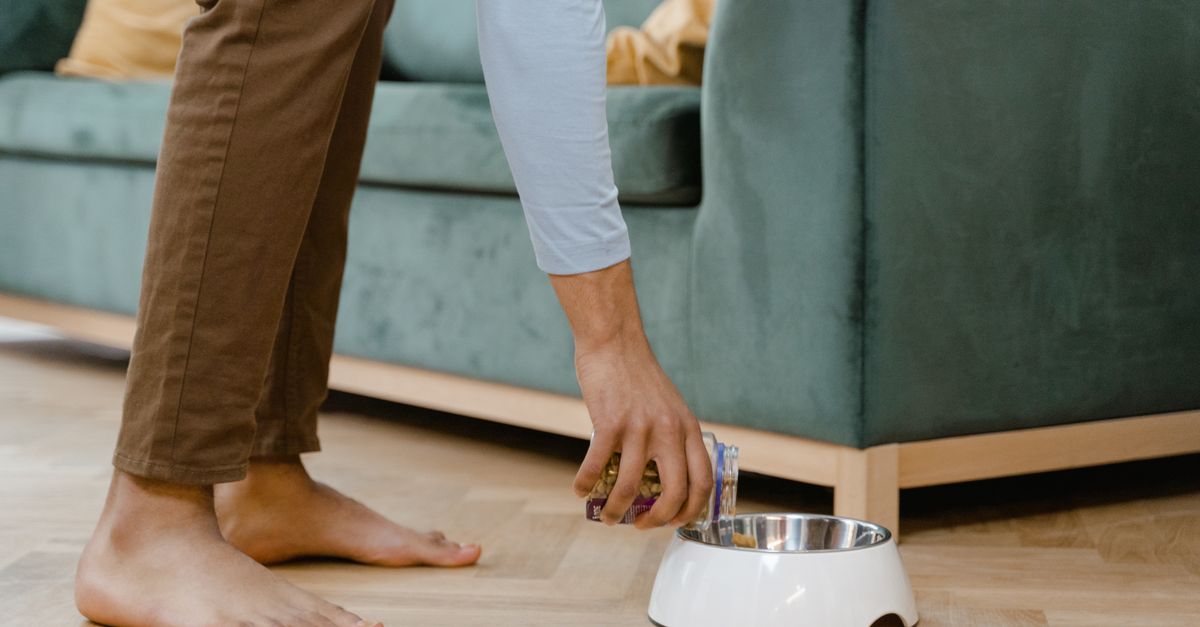
Put the station where the pet can eat without traffic pressure, use washable bowls and a wipeable mat, store food in a sealed container nearby, and review the area weekly for spills, pests, appetite changes, or conflict between pets.
A feeding station works best when it feels boring in the right way: the pet knows where food and water appear, the owner can clean the area quickly, and small changes are visible before they become a bigger care problem. The goal is not a styled corner for photographs. The goal is a repeatable place where meals happen calmly and evidence is easy to see.
Choose A Low-Traffic Feeding Spot
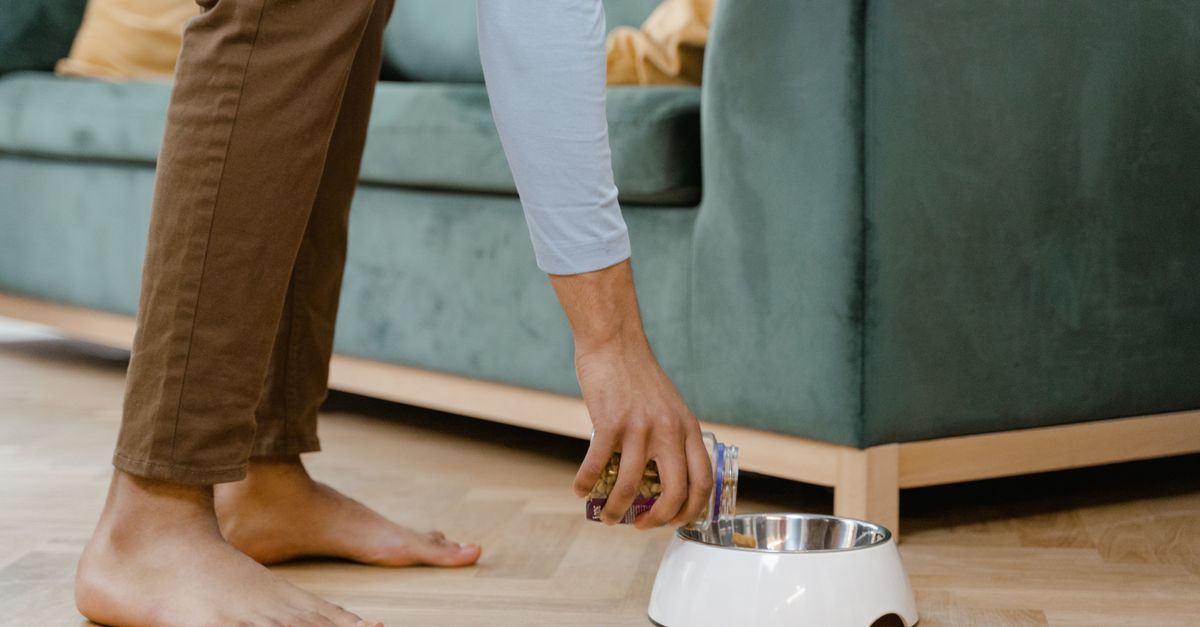
Start with traffic. A bowl beside a door, hallway, washing machine, or children's play area asks a pet to eat while monitoring movement. Some animals tolerate that; others rush, guard, spill water, or walk away. A calmer station gives the animal an exit route and enough distance from daily commotion that eating does not feel like a defended task.
For multi-pet homes, one shared feeding zone is often less peaceful than it looks. If one pet eats quickly and another grazes, the slower animal may lose food or feel watched. Separate bowls by distance, doorway, or room when competition appears. The better setup is the one that keeps meals observable without forcing every pet into the same tiny corner.
Separate Clean Storage From Mealtime Mess
Cleaning should be built into the layout, not left to willpower. A wipeable mat, washable bowls, and a nearby cloth turn cleanup into a short routine. If the station sits on carpet or under open shelving, crumbs and moisture are harder to see. That creates odor, pests, and confusion about whether a pet is eating normally.
Food storage belongs close enough to be convenient but sealed enough to stay boring. Keep the bag inside a lidded container if possible, keep the scoop dry, and avoid topping up old food endlessly without noticing dates or smells. If medication, supplements, or prescription diets are involved, label them clearly so a tired person cannot mix up the routine.
Use Bowl Placement To Reduce Tension
The weekly review is simple: look at the mat, bowl, wall, nearby floor, and food container. Ask what changed. More water gone than usual, food left behind, ants near the bowl, a cracked dish, or a pet hovering anxiously can all be useful signals. The station becomes a quiet logbook when the same person looks at it the same way each week.
Build A Two-Minute Cleaning Rhythm
For example, use a simple before/after pass: before acting, name the current pet feeding station setup assumption, the evidence visible today, and the cost of being wrong; after that pass, choose one bounded next move that can be checked again later.
Use this compact check during planning or review. It is intentionally short so the decision stays visible instead of becoming another broad checklist.
| Check | Evidence | Next move |
|---|---|---|
| Location | Pet eats without people stepping around the bowl | Move meals away from doors, litter boxes, and noisy appliances |
| Surface | Floor or mat can be wiped after every meal | Use a washable mat and keep a towel or cloth nearby |
| Storage | Food is sealed and measured consistently | Keep the scoop in the container and note feeding changes |
| Safety | Cleaner, chemicals, or unsafe foods are nearby | Move hazards out of reach and call a vet or poison resource for urgent concerns |
Notice Appetite And Water Changes Early
A weak setup hides problems because every meal is a small improvisation. A better setup makes the next action obvious: wipe, refill, separate, move, measure, or call for help. The article cannot diagnose a health issue, and appetite or drinking changes can deserve veterinary attention. Its job is to make those changes harder to miss.
Useful references for this article: AVMA responsible pet ownership resources and ASPCA Animal Poison Control. Use them for boundaries when pet feeding station setup touches safety, platform behavior, money, travel, or technical accuracy.
When The Station Needs A Reset
Use outside guidance for boundaries. The AVMA's pet-owner resources are a sensible starting point for general ownership responsibilities, and the ASPCA poison-control resource is the kind of reference to keep handy when a pet may have reached an unsafe food, cleaner, or plant. Do not wait on a blog checklist when the concern is urgent.
For a nearby same-site decision, continue with cat care routine basics when that question is the next practical step.